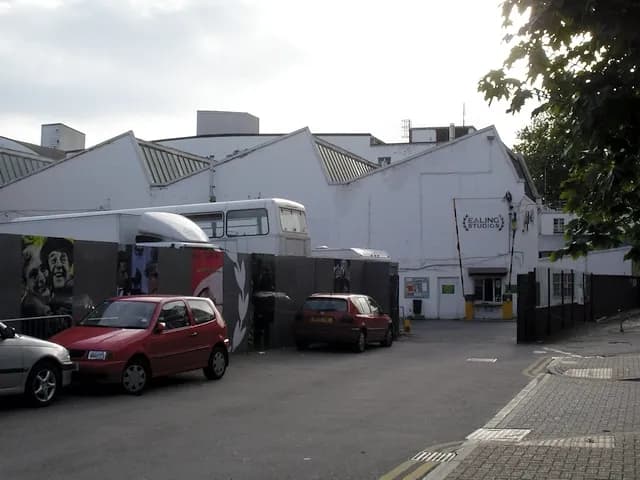
Ealing Studios has stood at the centre of British film production for nearly a century. Located on Ealing Green in West London, the studio complex remains the oldest continuously working film studio in the United Kingdom.
Origins on Ealing Green
The studios occupy a site that has been associated with film production since the early twentieth century. The buildings, with their distinctive white exterior and historic signage, sit adjacent to Ealing Green and have become one of the area's most recognisable landmarks.
Photographs from Wikimedia Commons show the studio buildings from multiple angles, including views from Ealing Green that capture the scale of the production facility within its residential surroundings. The main studio building features signage that has identified the location to generations of film workers and visitors.
The Ealing Comedies Era
The studio's reputation rests largely on the cycle of films produced in the 1940s and 1950s that became known as the Ealing Comedies. These productions, shot within the sound stages that still stand today, established a particular style of British filmmaking that mixed social observation with humour.
Films including Kind Hearts and Coronets, The Ladykillers, and Passport to Pimlico were produced at the Ealing facility. The sound stages where actors including Alec Guinness performed remain in use for contemporary productions.
Continued Operations
Unlike many historic studios that have closed or been converted to other uses, Ealing Studios has maintained continuous operation as a film and television production facility. The site has expanded over time while retaining its core historic structures.
Contemporary photographs of the studios show buildings that blend historical architecture with modern production requirements. The facility has adapted to changes in filming technology while preserving its character as a working studio with roots in the early days of British cinema.
Local Heritage and Identity
For residents of Ealing, the studios represent more than a film production facility. The name "Ealing" has travelled globally through the studio's film and television output, associating the West London borough with British cultural production in ways that few other local landmarks have achieved.
The studio buildings are visible from public areas around Ealing Green, allowing passers-by to observe the physical location where generations of film and television work has been produced. The facility's continued operation means that production activity remains a part of daily life in this corner of West London.
Architecture and Setting
The studio buildings documented in Wikimedia Commons images display a range of architectural styles reflecting different phases of construction and renovation. The white-painted exterior buildings visible from Ealing Green date from different periods in the studio's long history.
The site's location within a residential area, rather than on an isolated industrial estate, has shaped its relationship with the local community. Production crews work within walking distance of family homes and local shops, creating a particular dynamic between creative work and suburban life.
Preservation and Access
While the studios function primarily as a commercial production facility, the exterior buildings are visible from surrounding streets and greens. Photographs by contributors to Wikimedia Commons document the site from various vantage points, preserving images of how the facility appears within its Ealing context.
The continued operation of Ealing Studios as a working facility, rather than a heritage museum, distinguishes it from other sites of British film history. Productions made here enter distribution through contemporary channels, maintaining the connection between the Ealing location and audiences worldwide.